By Root & Evidence Editorial | Research reviewed November 5, 2026
Medical disclaimer: This article is for educational purposes and summarizes scientific research, regulatory guidance, and published product-safety findings. It is not medical advice or an endorsement of any supplement brand. Consult your primary care provider, pharmacist, or another qualified healthcare professional before using moringa supplements, particularly if you take medications, have an underlying medical condition, or are pregnant or breastfeeding.
The best moringa powder is one that contains clearly identified moringa leaves, comes from a traceable supplier, and has documented testing for microbial contamination, heavy metals, and other relevant contaminants. Certified organic products may provide additional reassurance about growing and processing standards, but organic certification alone does not demonstrate that a powder is free from Salmonella, lead, arsenic, or other potential contaminants. Ideally, a manufacturer should provide a recent, lot-specific Certificate of Analysis (COA) that identifies what was tested, which laboratory performed the testing, and whether the results met appropriate specifications. These details provide a much stronger basis for evaluating product quality than color, packaging, customer ratings, or claims that a powder is completely natural.
If you have been comparing moringa powders online, you have probably noticed how similar many of the product descriptions sound. Almost every manufacturer emphasizes the plant's vitamins, minerals, antioxidants, and traditional uses, while others highlight bright green color, organic farming, or a particular country of origin. Some brands advertise third-party laboratory testing without publishing the results, while others provide extensive nutritional claims but very little information about how their powder was harvested, processed, or stored. This can make choosing between two seemingly identical products surprisingly difficult, especially when one costs considerably more than the other.
Quality has become a particularly important consideration because multiple Salmonella outbreaks and product recalls involving moringa-containing supplements were investigated in the United States during 2025 and 2026. These incidents do not mean that all moringa powder is contaminated, but they demonstrate why a product's safety cannot be assumed from its popularity or natural origin. At Root & Evidence, we evaluate the evidence behind supplement claims while also examining whether the products themselves meet reasonable standards for identity, purity, and manufacturing transparency. Our complete moringa research guide provides a broader overview of the plant's proposed health benefits, human clinical evidence, available preparations, and safety considerations.
What Should You Look for When Buying Moringa Powder?
When comparing moringa powders, I would prioritize verifiable product information over marketing claims. A high-quality product should identify the botanical species and plant part, disclose the manufacturer or responsible distributor, provide reasonable traceability, and make meaningful quality-testing information available. Certifications can be useful, but they should be evaluated according to what they actually verify. A USDA Organic seal addresses compliance with organic production standards, for example, while a finished-product laboratory report may provide information about microbial contamination or heavy-metal concentrations. Neither document automatically answers every question about the product.
The following comparison provides a practical starting point.
| Quality factor | What to look for | What should raise questions |
|---|---|---|
| Botanical identity | Moringa oleifera leaf powder clearly identified | Unspecified plant parts or unclear botanical ingredients |
| Ingredient purity | Single-ingredient leaf powder if that is what you want | Undisclosed blends, fillers, or misleading serving information |
| Microbial testing | Recent results covering relevant organisms, including Salmonella | No microbial information or only an unsubstantiated testing claim |
| Heavy-metal testing | Actual results for lead, cadmium, arsenic, and mercury | Generic statements such as "heavy-metal free" without documentation |
| Organic certification | Valid, independently verifiable certification | Organic claims without an identifiable certification basis |
| Manufacturing quality | Traceability, documented quality controls, and relevant GMP compliance | No clear manufacturer, supplier accountability, or batch identification |
| Processing | Information about drying, milling, and moisture control | Poorly described processing or evidence of moisture damage |
| Packaging | Intact, moisture-resistant packaging with lot identification | Damaged seals, missing lot information, or uncertain storage conditions |
A product does not need extravagant packaging or a premium price to meet these standards. Conversely, a very expensive product may offer relatively little additional assurance if the manufacturer cannot explain its testing practices. The strongest purchasing decision usually comes from combining several sources of information, particularly independent certification where available, relevant laboratory documentation, and the manufacturer's willingness to answer reasonable quality-control questions.
What Is Moringa Powder Made From?
Moringa powder is commonly produced by harvesting leaves from the Moringa oleifera tree, drying them, and grinding them into a fine powder. The leaves contain protein, minerals, carotenoids, and several groups of plant compounds, including phenolics and flavonoids. However, not every product marketed as moringa uses precisely the same plant material. Some preparations may contain leaf material with small stems, while others involve seeds, roots, mixed plant parts, or concentrated extracts. These products can have substantially different chemical compositions, making botanical identification an important first step.
For ordinary dietary moringa leaf powder, look for a label that specifically identifies Moringa oleifera leaves as the ingredient. The botanical name helps distinguish the species, while the plant-part description tells you what material was actually processed. A product labeled only as moringa extract, without identifying the plant part or extraction method, provides less information about what you are consuming. This is especially relevant when comparing a plain culinary powder with a concentrated supplement that may contain a much greater proportion of certain extracted compounds.
Our moringa powder versus capsules comparison examines how these preparations differ in composition, serving size, convenience, and labeling. If your goal is to add moringa leaves to smoothies or meals, a transparent single-ingredient powder may be more appropriate than a concentrated extract, although neither preparation should be assumed to provide particular medical benefits without supporting clinical evidence.
Is Organic Moringa Powder Better Than Regular Moringa Powder?
Certified organic moringa powder may be preferable for consumers who value regulated agricultural practices, but organic certification should not be confused with comprehensive safety testing. In the United States, USDA organic certification involves standards governing how agricultural products are produced and handled, including restrictions on many synthetic pesticides and fertilizers. Certified operations must comply with relevant organic regulations and undergo oversight through accredited certifying organizations. These requirements can provide meaningful information about growing and processing practices, but they do not establish the exact concentrations of heavy metals or microorganisms in every finished package.
A common misunderstanding is that organic products cannot contain harmful bacteria or environmental contaminants. Salmonella can contaminate organically grown leaves during harvesting, drying, handling, transportation, or processing. Heavy metals may also occur naturally in soil or enter agricultural systems through environmental pollution, regardless of whether synthetic pesticides are used. Organic certification does not eliminate these potential sources of contamination, which is why microbiological and elemental testing should be considered separately.
The September 2026 recall of Foods Alive organic moringa leaf powder illustrates this limitation. The company recalled certain eight-ounce packages because of potential Salmonella contamination, despite the product being described as organic. The FDA posted the recall announcement, which identified the affected packaging and product codes. The event should not be interpreted as evidence that organic moringa is generally unsafe, but it demonstrates that organic cultivation and finished-product microbial safety are different quality questions.
If you prefer organic moringa, look for a legitimate certification claim rather than relying on the words natural, clean, or chemical-free. The USDA National Organic Program explains the official organic seal, while its Organic INTEGRITY database can help consumers verify certified operations. A conventionally grown powder with transparent contaminant testing may also be a reasonable option, and the available evidence does not establish that certified organic moringa produces superior clinical health outcomes simply because it is organic.
Why Third-Party Testing Matters for Moringa Powder
Third-party testing involves having a laboratory independent of the product seller assess particular characteristics of a supplement or ingredient. Depending on the tests requested, the laboratory may evaluate botanical identity, microbial contamination, elemental impurities, pesticide residues, moisture content, or other quality measures. These results can help manufacturers determine whether a batch meets defined specifications and provide consumers with a more meaningful basis for evaluating product quality.
However, the phrase "third-party tested" is not enough by itself. A company might test only one parameter, such as identity, while allowing customers to assume that heavy metals and bacteria have also been evaluated. Another manufacturer might reference testing performed several years ago on a different batch of raw material. Neither situation provides the same reassurance as a recent report documenting the characteristics of the specific product being sold.
The National Institutes of Health Office of Dietary Supplements identifies independent quality-verification organizations such as NSF, USP, and ConsumerLab as potential resources for evaluating supplement quality. These organizations differ in their testing programs and certification criteria, so their names should not be treated as interchangeable. The NIH also emphasizes that quality seals do not guarantee a supplement's safety or effectiveness in every circumstance.
You can review the NIH's guidance on purchasing dietary supplements for additional information about evaluating manufacturers and independent verification programs.
For moringa powder, I would particularly value laboratory testing that addresses microbial pathogens and heavy metals because both have been documented in published research and regulatory investigations. A product that provides a clear, current report covering these risks offers stronger evidence of its measured quality than one relying exclusively on promotional claims. Even so, a favorable test is evidence about the samples and attributes examined, not a guarantee that every package can never become contaminated.
What Is a Certificate of Analysis (COA), and How Do You Read One?
A Certificate of Analysis is a document reporting analytical results for a particular material or finished product. It may include physical characteristics, ingredient identity, microbial findings, heavy-metal concentrations, and other measurements relevant to quality control. COAs are commonly used within manufacturing supply chains, but some supplement companies also provide them to consumers. Their usefulness depends on whether the report is specific, current, complete, and connected to the product actually being purchased.
One of the first things to examine is the lot number. A moringa powder package may display a batch or lot code that identifies a particular production run. Ideally, the COA should reference the same lot, allowing the buyer to connect the laboratory measurements to the material being sold. A report from a different lot may show that a manufacturer performs some testing, but it cannot establish the measured contaminant levels of the current product.
The second consideration is the type of testing performed. A meaningful report should identify the substances or organisms measured, the analytical methods used, the results obtained, and the criteria used to determine whether those results are acceptable. For heavy metals, laboratories may report concentrations in milligrams per kilogram or parts per million. For microbiological testing, results may be reported as colony-forming units per gram or as the presence or absence of a particular organism in a specified sample quantity.
A useful certificate should also identify the laboratory and testing date. Independent laboratories may hold accreditation under ISO/IEC 17025, a standard addressing laboratory competence, but accreditation should ideally be verified along with the scope of tests covered. A company logo, an unsigned screenshot, or a statement that a product passed testing provides less information than an identifiable laboratory report. A legitimate COA may still require interpretation, particularly when the reporting units, detection limits, or acceptance criteria are unfamiliar.
What Should a Moringa Powder COA Include?
| Test or document field | Why it is relevant |
|---|---|
| Product identity and plant part | Confirms what material was submitted |
| Lot or batch number | Links the report to a particular production batch |
| Laboratory identification | Helps establish who performed the analysis |
| Test dates and methods | Provides context for the reported measurements |
| Salmonella testing | Evaluates a major documented foodborne hazard |
| Other microbial measurements | Helps assess bacterial, yeast, and mold contamination |
| Lead, arsenic, cadmium, mercury | Evaluates potentially harmful elemental impurities |
| Pesticide residues | Provides information about selected agricultural chemical residues |
| Moisture or water activity | Helps evaluate processing and storage characteristics |
| Acceptance criteria | Explains how results were assessed against specifications |
A report does not need to contain every possible laboratory measurement to be useful, and the appropriate testing program depends on the product and its intended use. Nevertheless, major omissions should prompt further questions. For example, a certificate showing only protein and calcium content cannot establish microbial safety. Similarly, a report listing acceptable heavy-metal concentrations does not demonstrate that the batch was tested for Salmonella.
How to Interpret Heavy-Metal Results on a COA
Suppose a laboratory report indicates that a moringa powder contains 0.4 milligrams of lead per kilogram of product. If someone consumes a five-gram serving, that concentration corresponds to approximately two micrograms of lead in that serving. This calculation illustrates why contaminant concentrations should be interpreted alongside the actual amount consumed rather than considered in isolation.
The example does not establish whether the product meets an appropriate safety standard. Risk assessment depends on the contaminant, the amount consumed, the frequency of consumption, the population involved, and relevant regulatory criteria. Lead exposure is particularly concerning because cumulative exposure can contribute to health risks, and consumers may obtain additional lead exposure from other dietary and environmental sources. A manufacturer should therefore be able to explain the specifications it uses rather than simply describing a product as compliant without identifying the relevant benchmark.
Another important detail is how a laboratory reports results below its detection or quantification limits. A value marked "not detected" does not necessarily mean that absolutely none of the substance is present. Instead, it usually means that the measured amount was below the analytical method's applicable detection threshold. Reports are more informative when the method and detection or quantification limits are included.
The FDA's dietary supplement manufacturing guidance explains the importance of appropriate specifications, test methods, actual results, and supplier qualification when manufacturers rely on analytical documentation. Although the requirements placed on manufacturers differ from what an individual consumer can reasonably investigate, the underlying principles are useful when comparing the transparency of supplement brands.
Should Moringa Powder Be Tested for Heavy Metals?
Heavy-metal testing is one of the most relevant quality checks for moringa powder because plants can absorb elements from their growing environment. The extent of accumulation varies according to soil composition, environmental contamination, agricultural practices, plant characteristics, and processing methods. The presence of a metal in a plant does not automatically indicate a dangerous product, since risk depends on concentration and exposure. However, toxic elements such as lead, cadmium, and arsenic deserve particular attention when a plant powder may be consumed regularly.
A 2015 study by Limmatvapirat and colleagues evaluated eleven elements in different moringa products purchased in Thailand using inductively coupled plasma mass spectrometry, commonly abbreviated ICP-MS. The researchers examined products including leaf capsules and tea leaves and observed differences in elemental concentrations among preparations. The highest concentrations of arsenic, chromium, mercury, and manganese occurred in the tea-leaf products, while the highest concentrations of several other elements, including cadmium and lead, occurred in leaf capsules. The authors concluded that continued monitoring of metals in moringa products was important for consumer health.
This study is useful because it demonstrates variation among commercial preparations, but it should not be interpreted as showing that all moringa capsules contain more lead than all moringa powders. The researchers examined a particular set of products purchased in one geographic market, and the findings cannot be generalized to every manufacturer or production batch. The study supports the need for product-specific measurements rather than assumptions based on whether a product is sold as a tea, capsule, or powder.
A separate investigation published in 2017 examined the labeling and quality of moringa products marketed in Zimbabwe. Researchers surveyed pharmacies and herbal shops, then tested three selected product samples for microbiological contamination and heavy metals. All three samples contained Escherichia coli and Salmonella species, and the authors reported elevated concentrations of certain metals relative to the standards used in their assessment. Although the sample size was extremely small and cannot establish contamination prevalence across the market, the findings demonstrate that poor quality is not merely a hypothetical concern.
These studies strengthen the case for testing actual batches instead of relying on broad claims about the nutritional benefits of moringa. They also show why it is worth looking beyond a product's country of origin or retail price. Quality can differ even among products manufactured from the same plant species, and the only reliable way to evaluate a particular contaminant is through appropriate analytical testing.
Can Moringa Powder Contain Salmonella or Other Harmful Bacteria?
Yes. Moringa leaf powder can become contaminated with microorganisms during cultivation, harvesting, drying, processing, packaging, or distribution. Because powdered leaves are commonly consumed without a subsequent validated pathogen-killing step, contamination may remain relevant when the product reaches consumers. The fact that a powder is dry does not guarantee that all harmful microorganisms have been eliminated, and an attractive appearance does not establish microbial safety.
A 2019 review by Walia, Kapoor, and Farber, published in the Journal of Food Protection, evaluated microbiological risks associated with moringa leaf powder intended for use in addressing undernutrition among infants and young children in Cambodia and India. The researchers reviewed documented microbial hazards associated with moringa powder and comparable dried foods, identifying organisms including Bacillus cereus, Escherichia coli, Listeria monocytogenes, and Salmonella species. Their assessment emphasized the importance of production practices and microbiological safety, particularly when a product may be consumed by vulnerable populations.
This paper was a qualitative risk assessment rather than a large clinical trial or a representative survey of products currently sold in the United States. It therefore cannot tell us the percentage of commercial moringa powders that are contaminated today. Its contribution is identifying plausible microbial hazards and explaining why processing and contamination control matter for a dried botanical ingredient. Subsequent outbreak investigations provided direct evidence that these hazards can cause illness when contaminated products enter the food supply.
What Happened During the 2025 and 2026 Moringa Recalls?
The Centers for Disease Control and Prevention investigated several Salmonella outbreaks associated with moringa-containing products during 2025 and 2026. One major multistate investigation, closed on July 22, 2026, identified 131 reported illnesses, 36 hospitalizations, and no deaths across 38 states. Epidemiologic, laboratory, and traceback evidence connected illnesses to contaminated moringa leaf powder used in several dietary supplement products. The affected products included certain moringa capsules and greens powders, demonstrating that the contamination concern was not limited to products explicitly sold as plain moringa powder.
A separate investigation involving MOGO moringa capsules was closed in July 2026, while another outbreak involving Rosabella moringa capsules had been investigated earlier in the year. These events should not be combined indiscriminately into a single case count, since the CDC and FDA reported them as distinct investigations. In September 2026, Foods Alive also recalled specific organic moringa leaf powder packages because of possible Salmonella contamination. That recall was an additional product-safety warning and should not be treated as proof that every package of moringa powder was affected.
The CDC emphasized that recalled moringa products may remain in people's homes because powders and capsules often have long shelf lives. If you already own moringa powder, check the manufacturer, product name, lot number, and expiration or best-by date against official recall notices before consuming it. Recalled products should be discarded or returned according to the official instructions, even if they look and smell normal. You can review the CDC's moringa-linked Salmonella outbreak investigation and the FDA's moringa recall information for affected products and identifying details.
The practical implication is not that every moringa product is unsafe, but that microbial quality deserves at least as much attention as organic status or nutritional content. Manufacturers that document their control procedures, maintain lot traceability, and provide relevant microbiological results offer more information for evaluating product quality than manufacturers making unsupported claims about purity.
How Can You Tell If Moringa Powder Is Pure?
Purity can refer to several different characteristics, including whether a product contains the correct botanical species, whether unnecessary ingredients have been added, and whether it contains unacceptable levels of contaminants. These characteristics require different kinds of evidence. A product made from 100% moringa leaf may be free from added fillers but still contain microorganisms or heavy metals. Conversely, a product containing additional ingredients may be intentionally formulated as a blend rather than adulterated, provided those ingredients are properly disclosed.
For a plain moringa powder, start with the ingredient statement. Ideally, it should identify Moringa oleifera leaf powder without unexpected additional ingredients. Product labeling should also disclose relevant serving information, the responsible manufacturer or distributor, and other information required for the way the product is marketed. A transparent label allows consumers to understand what is being purchased, but it does not independently confirm every claim made by the seller.
Botanical identity can be assessed through appropriate analytical or identification methods, while contamination requires separate testing. Some manufacturers use microscopic, chromatographic, or molecular methods to verify plant identity, depending on the material and processing stage. A company that documents its identity-verification program provides stronger evidence than one relying exclusively on the appearance of green powder.
What Color Should High-Quality Moringa Powder Be?
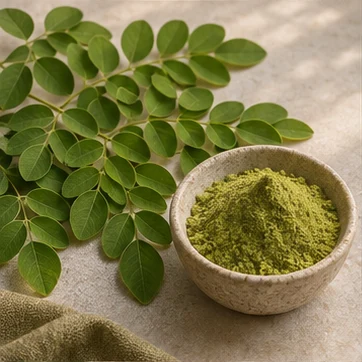
Moringa leaf powder is generally green because the leaves contain chlorophyll and other naturally occurring pigments. Depending on the variety, harvesting conditions, drying process, and storage, the color may range from relatively bright green to a more muted olive tone. A product that smells strongly musty, appears visibly moldy, or shows signs of moisture damage should not be consumed. However, color alone cannot establish whether a powder contains the correct plant, retains particular nutrients, or is free from harmful microorganisms.
Some buying guides describe bright green powder as proof that moringa was processed correctly. Although color may provide clues about drying and pigment retention, the relationship is more complicated. Different methods preserve different nutrients to different degrees, and chlorophyll concentration cannot tell you the amount of lead, arsenic, or Salmonella present in a sample. A powder can appear vibrant while still failing a laboratory quality specification, and a slightly duller product is not necessarily unsafe.
For consumers, appearance and aroma are best treated as additional observations rather than primary quality tests. Visible contamination, damaged packaging, or signs of moisture are reasons to avoid a product, but an attractive green color is not a substitute for documented testing. If a company markets its moringa exclusively by emphasizing exceptional color while providing no information about microbiological quality or sourcing, there is insufficient evidence to conclude that it is superior.
Does Freeze-Dried or Shade-Dried Moringa Powder Have More Nutrients?
Drying methods can influence the chemical composition of moringa leaves, although the effects vary depending on which compounds researchers measure. A study published in 2018 evaluated freeze-drying, sun drying, air drying, and oven drying of moringa leaves. Researchers found that drying methods significantly changed measured phenolic compounds, flavonoids, vitamin C, antioxidant-related activity, and other constituents. Freeze-drying performed particularly well across several tested measures, followed by air drying, sun drying, and oven drying in the overall comparison reported by the authors.
A separate study examining carotenoids, tocopherols, ascorbic acid, and antioxidant activity also found that retention differed according to the drying procedure. In that investigation, cabinet tray drying performed comparably to freeze-drying for some measures, while freeze-drying was especially favorable for others. These findings illustrate that there is no single processing method guaranteed to preserve every nutrient equally well, and laboratory measurements of retained compounds do not automatically translate into superior health benefits when people consume the finished powder.
Processing also involves tradeoffs beyond nutrient retention. Drying conditions must sufficiently reduce moisture and support safe storage, while harvesting and handling practices influence contamination risk. A manufacturer may use an effective drying method yet still produce a poorly controlled powder if equipment hygiene, packaging, or other processing steps are inadequate. Likewise, a product advertised as raw or minimally processed is not automatically more nutritious or safer than one manufactured using a validated processing procedure.
If a company emphasizes freeze-drying, low-temperature processing, or shade drying, it is reasonable to ask what evidence supports its claims and whether nutrient measurements were performed on the finished product. A specific processing claim may be useful, but it should not outweigh the absence of credible microbial and contaminant testing.
Does the Country of Origin Matter When Choosing Moringa Powder?
Moringa is cultivated in numerous tropical and subtropical regions, including parts of South Asia, Africa, and other areas with suitable growing conditions. Its nutrient composition and contaminant exposure may vary according to soil characteristics, climate, irrigation water, harvesting methods, and processing practices. However, country of origin alone does not establish whether a particular product is safe or nutritionally superior.
Some consumers prefer products from a specific country because they associate the region with traditional moringa cultivation, while others prefer locally processed or domestically packaged powders. Those preferences can be reasonable, but they should not substitute for traceability and testing. A product imported from a country with a history of moringa cultivation may be manufactured under excellent quality controls, while a product packaged domestically may still contain imported raw material of uncertain quality.
The 2026 FDA investigations traced some affected moringa ingredients through international supply chains and identified deficiencies during certain supplier inspections. The agency also increased screening of imported moringa powder from India for Salmonella following specific investigations. These findings concern particular contaminated materials and suppliers, not a conclusion that all moringa produced in India is unsafe. The more useful purchasing question is whether the company can identify its sourcing arrangements, document supplier qualification, and connect its test results to the actual material sold.
What Certifications Should the Best Moringa Powder Have?
Certifications can help consumers evaluate certain manufacturing or product characteristics, but their meanings differ. USDA Organic addresses organic production and handling requirements, while independent supplement certification programs may evaluate label accuracy, selected contaminants, and manufacturing practices. GMP-related certifications or registrations may focus on manufacturing facilities and quality systems rather than confirming that each finished product was independently tested.
The NIH Office of Dietary Supplements identifies NSF, USP, and ConsumerLab as organizations involved in independent quality evaluation. NSF explains that its dietary supplement certification programs may include product testing, evaluation of label claims, and assessment of contaminants. It also distinguishes ordinary supplement certification from its Certified for Sport program, which includes additional testing for substances prohibited in athletic competition. Consumers should verify an actual product's certification status through the relevant organization's directory rather than assuming that a logo displayed in an online listing is authentic.
A facility's GMP certificate should not be confused with product-specific verification. Facility-level oversight may indicate that manufacturing processes meet certain quality-system requirements, but it does not necessarily mean that the particular moringa powder being purchased has been independently tested for every relevant contaminant. Similarly, a laboratory's accreditation does not mean it has evaluated every product sold by the brand.
For many consumers, the most useful evidence will be a combination of clearly identified ingredients, credible manufacturing practices, verifiable third-party certification where available, and recent lot-specific analytical results. No certification should be interpreted as a guarantee that moringa improves blood sugar, reduces inflammation, or produces another clinical health benefit. Product quality and treatment effectiveness are separate questions.
How Much Should High-Quality Moringa Powder Cost?
The price of moringa powder can vary according to the cost of cultivation, organic certification, processing techniques, laboratory testing, supply-chain arrangements, packaging, importation, and retail distribution. Products sold in small packages may cost substantially more per gram than bulk products, while premium branding and marketing can increase the retail price without necessarily providing additional evidence of quality. An expensive powder is not automatically better, and an inexpensive powder is not automatically contaminated.
When comparing prices, consider the quantity of actual moringa leaf powder rather than the number of servings advertised by the seller. Serving sizes can differ among products, making a comparison based only on the number of servings potentially misleading. A product containing additional ingredients may also have a different cost structure from a single-ingredient powder, and larger packages may offer lower prices per gram while increasing the amount of powder that must be stored after opening.
I would be more willing to pay a reasonable premium for a manufacturer that provides transparent sourcing, current product-specific laboratory results, and credible quality certifications than for one relying on vague claims about extraordinary antioxidant strength or superior nutrient absorption. However, the value of any premium depends on what the additional information actually establishes. A product that costs twice as much because it uses attractive packaging, for example, may offer little advantage over a simpler product with better documentation.
Is Moringa Powder Better Than Moringa Capsules?
Powder and capsules may contain similar moringa leaf material, but their convenience, serving sizes, ingredient lists, and quality characteristics can differ. Loose powder can be measured and incorporated into foods or beverages, while capsules provide a more convenient way to consume a predetermined quantity. Capsules may also contain additional ingredients such as cellulose, gelatin, or processing aids, which should be disclosed on the label. Neither format is automatically safer or more effective because of its physical form.
The most relevant comparison is between the actual materials and quality controls used. A capsule made from well-tested leaf powder may be preferable to loose powder with no documented testing, while the opposite may also be true. If a capsule product claims to contain a highly concentrated extract, its composition may differ substantially from ordinary dried leaf powder. The amount listed on the label should therefore be interpreted according to whether it represents whole-leaf material, an extract, or a mixture of ingredients.
Our moringa powder versus capsules guide provides a more detailed comparison of practical use, labeling, dosage, and available evidence. Readers who are primarily interested in convenience can use that information alongside the quality-control criteria outlined here.
How Do You Know If a Moringa Brand Is Trustworthy?
A trustworthy supplement manufacturer should be able to provide information that can be independently assessed. Useful signs include a clearly identified responsible business, accessible customer support, transparent labeling, appropriate manufacturing quality controls, and a willingness to explain how product testing is performed. Some companies publish Certificates of Analysis directly on their websites, while others provide them upon request. A brand does not necessarily need to publish every internal manufacturing record, but it should be able to answer reasonable questions about its products.
When contacting a manufacturer, ask whether the powder is made entirely from moringa leaves, whether each production lot is assigned a traceable identifier, and which microbial and chemical contaminants are routinely tested. It is also useful to ask whether the results come from an independent laboratory, whether testing covers the finished product or only incoming ingredients, and how the company decides whether a batch can be released for sale. A manufacturer that responds with a specific report or a clear explanation provides more useful information than one that simply repeats that the product is natural, pure, or manufactured under strict standards.
A company's willingness to discuss recalls and product-quality concerns can also be informative. Responsible manufacturers should have procedures for identifying and tracing affected lots, communicating recalls, and investigating quality problems. However, the absence of a known recall does not prove that a product has never been contaminated, and the presence of an isolated recall does not automatically establish that every other product from a company is unsafe. Current product documentation and regulatory status are more useful than relying on reputation alone.
What Do Food-Safety Researchers and Supplement Experts Say About Moringa Quality?
Research from food scientists and analytical chemists provides an important perspective on moringa quality because it focuses on measurable hazards rather than promotional descriptions. In their 2019 qualitative microbiological risk assessment, Kavita Walia, Ansdeep Kapoor, and Jeffrey Farber examined the potential hazards associated with moringa leaf powder and identified several foodborne pathogens of concern. Their work focused on vulnerable young children in specific settings, so it should not be treated as evidence that all commercially available moringa products pose the same degree of risk. Nevertheless, it highlights why hygienic production and appropriate microbiological controls are central considerations when evaluating dried botanical products.
Researchers led by C. Limmatvapirat also demonstrated that elemental concentrations vary among moringa preparations. Their 2015 study used ICP-MS to measure eleven elements in commercially purchased products, illustrating how analytical testing can reveal information that consumers cannot determine from packaging, smell, or appearance. The study did not establish universal contamination levels for moringa, but its findings support testing actual materials rather than assuming a uniform nutritional or contaminant profile.
Research on drying methods adds another dimension to quality. Investigations published in 2014 and 2018 found that different drying procedures alter the retention of vitamins, carotenoids, phenolic compounds, and antioxidant-related measurements. These results help explain why two authentic moringa powders may differ nutritionally even if neither contains adulterants. They also demonstrate that processing claims should be evaluated according to the specific compounds measured rather than assuming that every low-temperature method is superior for every outcome.
Physicians and independent supplement-safety experts also emphasize the limits of certification. In guidance reported by Consumer Reports, physician and supplement researcher Dr. Pieter Cohen explained that even a certified supplement containing the ingredients listed on its label may still cause adverse effects. This observation is particularly relevant to moringa because third-party testing can support product-quality claims without establishing that the ingredient is appropriate for every individual or clinically effective for a particular condition.
For consumers, these expert perspectives suggest three separate questions: whether the product contains the intended ingredient, whether it meets relevant safety and quality specifications, and whether using the ingredient is appropriate for the individual's health goals. A favorable answer to one question does not automatically answer the others.
What Do Reddit Users and Supplement Blogs Say About Moringa Powder Quality?
As part of researching this guide, we searched Reddit discussions in r/Supplements and other public communities where people discuss moringa products, supplement certification, laboratory testing, and product recalls. We also examined buying guides and articles from Organic Connection, Moringa.co, Powered By Moringa, ODOD Group, and Evident Reviews. These sources help identify common questions and purchasing concerns, but they are not substitutes for laboratory evidence or regulatory guidance.
What Reddit Users Say About Moringa Brands
In a r/Supplements discussion about the best moringa brand, commenters compared products based on personal experiences, perceived freshness, color, smell, and manufacturer reputation. Some participants preferred particular brands because the powder appeared greener or smelled more pleasant, while later comments emphasized the importance of organic certification and laboratory results following the 2026 recalls. These observations illustrate how purchasing priorities can change when new safety information becomes available, but they do not independently establish which brand has the lowest contaminant levels.
Another r/Supplements discussion about third-party testing asked how consumers could distinguish meaningful quality certifications from decorative marketing badges. Several participants emphasized the value of independently searchable certification databases, actual analytical reports, and transparent testing information. Others pointed out that programs such as NSF and USP have different scopes and may not certify every supplement a consumer is considering. The discussion reflects a useful consumer concern: the presence of a logo is much less informative if its authenticity and relevance cannot be verified.
Following the Rosabella moringa recall, another r/Supplements post described a consumer who had stopped using the recalled product and was looking for alternatives. Additional r/Supplements recall discussions shared warnings about contaminated moringa products and encouraged readers to check official notices. These posts should not be used to establish the effectiveness of individual brands, but they demonstrate why recall awareness and traceability have become central concerns for some moringa consumers.
Across the discussions reviewed, two types of recommendations appeared repeatedly. Some users relied on subjective observations, such as color, smell, or how a product made them feel, while others prioritized verifiable testing and certification. Personal experiences can help someone understand taste or convenience, but laboratory and regulatory information is more appropriate for evaluating microbial contamination and elemental impurities. We did not independently test any brands named in these discussions, and the comments should not be interpreted as product endorsements.
What Online Moringa Buying Guides Recommend
We also reviewed several commercial and editorial buying guides. Organic Connection emphasizes organic certification, sourcing relationships, and product comparisons. Moringa.co discusses the difference between organic production and testing for microbial or elemental contaminants. Powered By Moringa focuses on identifying plant parts, understanding processing, and asking manufacturers specific questions about quality. ODOD Group provides a supplier-oriented perspective involving microbial specifications, heavy metals, moisture, and processing practices, while Evident Reviews emphasizes product labeling, traceability, and lot-specific documentation.
These guides share several useful recommendations, particularly the importance of botanical identity and credible testing. However, commercial guides may also reflect the products or suppliers they promote, and technical specifications can vary according to jurisdiction, intended use, and product category. At Root & Evidence, we prioritize independently published scientific findings and regulatory information when evaluating safety claims. A manufacturer's testing documentation can be useful evidence, but it should be examined according to what was actually measured rather than accepted as proof of overall superiority.
How to Store Moringa Powder After Opening
Proper storage helps limit moisture exposure and deterioration after a package has been opened. Moringa powder should generally be kept in a clean, dry, well-sealed container, away from excessive heat, humidity, and direct sunlight, unless the manufacturer provides different validated storage instructions. Packaging that reduces moisture and light exposure may help preserve the product's physical characteristics and some sensitive constituents. Repeatedly opening a large container in a humid environment may also increase opportunities for moisture exposure.
Use a clean, dry utensil when removing powder and avoid introducing water into the container. Moisture may contribute to clumping and create conditions that support certain forms of deterioration, although not every clump indicates contamination. If a powder develops visible mold, an unusual odor, dampness, or other concerning changes, it should not be consumed. Attempting to rescue a questionable product by drying or heating it at home is not a reliable substitute for appropriate manufacturing controls.
The expiration or best-by date should be considered alongside the manufacturer's packaging and storage instructions. A product may maintain acceptable quality when stored under its intended conditions but deteriorate more quickly if exposed to heat, humidity, or damaged packaging. Choosing a package size that you can reasonably use within the labeled period may therefore be more practical than automatically purchasing the largest available quantity.
How Much Moringa Powder Should You Take?
There is no universally established daily moringa powder dose for general wellness, and the appropriate amount depends on the preparation, intended use, individual health circumstances, and evidence supporting a specific outcome. Human studies have used different quantities and formulations, so a dose reported in one investigation should not automatically be applied to another product or health goal. Manufacturers may also define serving sizes differently, making it difficult to compare products using spoonfuls or capsule counts alone.
If you are considering dietary use, check the amount stated on the product label and remember that loose powders can vary in density. A teaspoon is not necessarily an accurate substitute for a measured gram quantity, particularly when comparing powders processed differently. People taking medications or managing medical conditions should discuss supplementation with their healthcare professional rather than assuming that larger amounts are harmless because moringa is a plant-derived ingredient.
Our how much moringa powder per day guide examines the quantities used in published human research and explains why those amounts do not establish a universal recommendation. We also discuss daily use and the limitations of longer-term safety evidence in Can You Take Moringa Every Day?.
Is Moringa Powder Safe to Take Every Day?
Moringa leaves are consumed as food in several regions, but everyday dietary use and concentrated supplementation should not be treated as identical exposures. The amount consumed, preparation method, and presence of other ingredients can influence both potential benefits and adverse effects. Some users may experience gastrointestinal discomfort, while possible interactions deserve consideration among people taking medications affecting blood glucose or blood pressure. Evidence supporting specific interaction risks remains limited, so decisions should be individualized rather than based on broad claims that moringa is either completely safe or universally dangerous.
Long-term safety also depends on the quality of the product itself. Consuming a contaminated powder repeatedly may increase exposure to unwanted substances, while a short-term clinical study that reports few adverse events cannot establish the safety of every commercial preparation over months or years. The 2026 Salmonella investigations demonstrate that product contamination can cause acute illness independent of any effects associated with moringa's natural constituents.
Our best time to take moringa powder guide explains what is known about administration timing and why the research does not establish one universally optimal schedule. Before establishing a daily routine, it is more useful to confirm that the product is appropriate for your circumstances and that the intended benefit has supporting evidence.
Does Higher-Quality Moringa Powder Provide Greater Health Benefits?
A powder that meets appropriate quality standards is preferable to one with unacceptable contamination, but better manufacturing quality does not necessarily produce stronger clinical benefits. Product testing can provide information about identity, purity, and certain measured constituents. It cannot demonstrate that moringa lowers blood glucose, improves cholesterol, promotes weight loss, or treats inflammation unless those outcomes have been investigated through suitable clinical research.
Even when two products differ in measured antioxidant compounds or vitamin concentrations, the clinical significance may remain uncertain. Laboratory antioxidant assays measure particular chemical activities under controlled conditions, while human health outcomes depend on absorption, metabolism, dose, and many biological factors. Higher antioxidant activity in a powdered product therefore does not automatically translate into a greater health benefit after consumption.
Our articles on moringa and blood sugar and moringa for weight loss examine those proposed benefits separately, including the limitations of available human trials. For readers considering moringa as a beverage rather than a powder, our moringa tea benefits guide explains how tea differs from whole-leaf supplementation and why results from concentrated extracts cannot automatically be applied to an ordinary brewed drink.
Frequently Asked Questions About Choosing the Best Moringa Powder
What is the best moringa powder to buy?
The best choice is a product that clearly identifies Moringa oleifera leaf powder, provides transparent manufacturer information, and has credible evidence of quality testing. Ideally, that evidence includes recent results addressing microbial contamination and heavy metals, with the report linked to the relevant production lot. Organic certification may be desirable, but it should not replace contamination testing. Without independently evaluating the current products and their laboratory documentation, it would be inappropriate to declare one brand the safest or most effective.
How do I know if moringa powder is real?
Authentic moringa leaf powder should come from the correct botanical species and plant part. Its natural color, aroma, and texture may provide limited clues, but appearance cannot conclusively establish botanical identity. A transparent ingredient statement and a manufacturer with documented identity-verification procedures are more useful. If the product includes other plant parts, fillers, or extracts, those ingredients should be clearly disclosed rather than hidden behind general descriptions such as pure green superfood.
Does USDA Organic mean moringa powder is safe?
USDA Organic certification provides information about agricultural production and handling standards, not a guarantee that a product is free from every contaminant. Organic moringa can still become contaminated with bacteria during processing or handling, and heavy metals may be present because of environmental exposure. Specific organic moringa products were included in 2026 recall notices for possible Salmonella contamination. Consumers should therefore evaluate organic certification alongside relevant microbial and chemical testing rather than treating it as a replacement for those checks.
What is the difference between organic and non-organic moringa powder?
The main distinction concerns the standards governing cultivation and handling, particularly the use of certain agricultural inputs and requirements for organic certification. These differences do not establish that organic moringa has a superior clinical effect or that conventionally grown powder is necessarily unsafe. Both types can vary in nutrient composition, processing, and contamination levels. A meaningful comparison should consider the product's ingredient identity, actual laboratory results, sourcing transparency, and suitability for the intended use.
Does moringa powder need third-party testing?
Independent testing is highly desirable because it provides information that cannot reliably be determined from packaging or appearance. However, consumers should verify what was tested, whether the report applies to the current product, and whether the laboratory is identifiable and appropriately qualified. A statement that a powder is third-party tested does not necessarily mean that it has been evaluated for every relevant pathogen, metal, or pesticide. Meaningful documentation is more informative than an unsupported testing badge.
What should a moringa Certificate of Analysis show?
A useful COA should identify the product and lot, provide the laboratory and testing date, describe the methods used, and report actual results or clearly defined pass criteria. For moringa leaf powder, microbial testing and concentrations of relevant heavy metals are particularly informative. Depending on the product and source, pesticide residues, moisture, water activity, and other quality characteristics may also be relevant. A certificate that applies to a different batch or lists only nutritional measurements provides limited assurance about the current product's contamination profile.
Can moringa powder contain lead or arsenic?
Yes. Like other plant-derived materials, moringa can contain trace elements absorbed from the environment or introduced through parts of the supply chain. Published studies have measured lead, arsenic, cadmium, and other elements in moringa products, with concentrations varying across the sampled preparations. The mere detection of an element does not establish that a product exceeds an applicable safety limit, but the amount consumed and frequency of exposure are important. Product-specific laboratory testing provides more useful information than assuming all moringa powders have the same elemental composition.
Is bright green moringa powder always higher quality?
Bright green color may indicate retained leaf pigments and certain processing characteristics, but it cannot confirm microbial safety, low heavy-metal concentrations, or superior clinical effectiveness. Different drying methods can preserve some nutrients better than others, and no single visual characteristic establishes overall product quality. An unusually brown or musty powder may raise concerns about handling or deterioration, but an attractive green product can still contain contaminants. Appearance should be considered alongside, not instead of, appropriate quality documentation.
Is freeze-dried moringa powder better than regular moringa powder?
Freeze-drying has performed well in certain laboratory studies measuring nutrient retention and antioxidant-related properties, particularly for some sensitive plant compounds. However, other drying methods have preserved particular nutrients effectively under certain conditions, and freeze-drying is not automatically superior for every constituent. It also does not eliminate the need for microbial controls, hygienic processing, or contaminant testing. A freeze-dried product without transparent quality information may be less reassuring than a conventionally dried powder with comprehensive documentation.
Should I avoid moringa powder after the 2026 recalls?
The 2026 recalls demonstrate that certain moringa products were contaminated or potentially contaminated, but they do not establish that every moringa powder is unsafe. Consumers should avoid specific recalled products and check current official notices using the manufacturer, lot number, and expiration date. Anyone experiencing symptoms of foodborne illness after consuming a recalled product should seek appropriate medical guidance. For products not covered by a recall, transparent sourcing and credible testing remain valuable purchasing considerations.
Is moringa powder better than moringa capsules?
Neither format is automatically better. Powder can be added to food or drinks and may offer greater flexibility in serving size, while capsules provide convenience and may make the flavor easier to avoid. Both formats can contain contaminated or poorly characterized material if manufacturing controls are inadequate. The most useful comparison involves the specific ingredients, preparation, dose, independent testing, and manufacturer's quality practices rather than the physical form alone.
Can I trust moringa powder sold on Amazon or other marketplaces?
A major marketplace can provide convenience, but the platform itself does not establish the quality of every supplement sold by independent merchants. Consumers should verify the actual manufacturer, seller identity, product label, and supporting documentation rather than relying only on ratings or promotional descriptions. Counterfeit or incorrectly represented products are an additional concern in online retail, so purchasing directly from an identifiable manufacturer or authorized seller may make traceability easier. Regardless of where a product is purchased, official recall information should be checked when relevant.
Final Thoughts: Choosing Moringa Powder Based on Evidence, Not Marketing
Choosing a high-quality moringa powder involves more than finding the greenest product, the lowest price, or the most impressive list of nutritional claims. Published research has demonstrated that moringa preparations can vary in elemental composition and nutrient retention, while food-safety investigations have documented microbial contamination in particular products. These findings make botanical identity, traceability, appropriate manufacturing controls, and meaningful laboratory testing especially relevant when evaluating a product intended for regular consumption.
Certified organic moringa may offer additional information about agricultural practices, but it should not be treated as a guarantee of microbial safety. Similarly, an independent laboratory report is useful only when it documents relevant tests and can be connected to the product being sold. When comparing brands, I would place greater value on transparent quality-control information than on vague promises of exceptional purity, superior antioxidant strength, or dramatic health improvements.
At Root & Evidence, our goal is to help readers understand both the scientific evidence supporting an ingredient and the limitations of the products used to deliver it. A well-manufactured moringa powder may be a reasonable dietary choice for some people, but better product quality does not establish that it treats a medical condition or provides benefits beyond those demonstrated in clinical research. The most informed purchasing decision considers both questions separately: whether the product is appropriately characterized and whether there is credible evidence for the intended use.
For more information about moringa's proposed health benefits, available preparations, and safety considerations, continue with our complete Moringa Research Guide. You can also learn more about our research methodology, evidence rating system, and Root & Evidence Editorial.
How We Reviewed the Evidence
This article was prepared by Root & Evidence Editorial using published analytical studies, food-safety research, federal regulatory guidance, certification resources, and publicly available consumer discussions. We prioritized sources that examined measurable product characteristics, including microbial contamination, elemental impurities, nutritional composition, drying methods, and manufacturing controls. We also compared findings from published research with information supplied by supplement manufacturers and purchasing guides, recognizing that commercial content may have different purposes and potential conflicts of interest.
The studies included in this guide serve different purposes and should not be interpreted as interchangeable forms of evidence. Investigations measuring heavy metals provide information about the specific samples tested, while microbiological risk assessments identify potential hazards without necessarily measuring their prevalence in the current marketplace. Drying experiments demonstrate changes in chemical composition under controlled processing conditions, but they do not establish that a powder produced using a particular method improves health outcomes in humans. Federal outbreak investigations provide direct evidence of contamination associated with identified products and supply chains, although they do not establish that every moringa powder poses the same level of risk.
We also reviewed public discussions and commercial buying guides to identify recurring consumer concerns, including certification, color, brand transparency, and product recalls. These sources were used to understand consumer questions rather than determine product quality or clinical efficacy. We did not purchase supplements, independently test commercial batches, conduct laboratory analyses, or assign an original quantitative safety score to individual brands. Our recommendations are based on the available published evidence and established principles of supplement quality evaluation.
Evidence assessment: This is a purchasing and quality-control guide rather than an evaluation of a single clinical treatment outcome. Evidence supporting the existence of particular moringa contamination hazards includes analytical studies and confirmed outbreak investigations. Evidence that higher-priced, organic, or differently processed powders deliver superior clinical health outcomes remains insufficient. Product-quality recommendations should therefore not be confused with clinical efficacy ratings.
Research reviewed: November 5, 2026.
References and Further Reading
Peer-Reviewed Scientific Research
Limmatvapirat C, et al. Comparison of Eleven Heavy Metals in Moringa Oleifera Lam. Products. Indian Journal of Pharmaceutical Sciences. 2015.
Walia K, Kapoor A, Farber JM. Qualitative Microbiological Risk Assessment of Moringa oleifera Leaf Powder To Be Used To Treat Undernutrition in Infants and Children in Cambodia and India: A Review. Journal of Food Protection. 2019.
Quality and Labeling Information of Moringa oleifera Products Marketed for HIV-Infected People in Zimbabwe. 2017.
Drying Alters the Phenolic Constituents, Antioxidant Properties, α-Amylase, and α-Glucosidase Inhibitory Properties of Moringa oleifera Leaf. 2018.
Effect of Dehydration Methods on Retention of Carotenoids, Tocopherols, Ascorbic Acid and Antioxidant Activity in Moringa oleifera Leaves and Preparation of a RTE Product. 2014.
NIR Spectroscopy for the Quality Control of Moringa oleifera Leaf Powders: Prediction of Minerals, Protein and Moisture Contents. Food Chemistry. 2018.
Health Risk Assessment of Toxic Metal(loids) via Consumption of Medicinal Herbs Marketed in Malawi. Toxicology Reports. 2023.
Influence of Drying Methods on Phytochemical Retention of Moringa oleifera Leaves and Green Synthesis of Zinc Oxide Nanoparticles Using the Optimal Moringa oleifera Leaf Extract. Food Science & Nutrition. 2026.
Government and Quality-Control Resources
National Institutes of Health Office of Dietary Supplements. Dietary Supplement Purchasing and Quality Guidance.
https://ods.od.nih.gov/HealthInformation/ODS_Frequently_Asked_Questions/
Centers for Disease Control and Prevention. Salmonella Outbreak Linked to Moringa Leaf Powder, July 2026.
https://www.cdc.gov/salmonella/outbreaks/supergreenssupplementpowders-1-26/index.html
U.S. Food and Drug Administration. Outbreak Investigation of Salmonella: Moringa Leaf Powder, January 2026.
U.S. Department of Agriculture. The Organic Seal.
https://www.ams.usda.gov/rules-regulations/organic/organic-seal
NSF. Dietary Supplement and Vitamin Certification.
https://www.nsf.org/consumer-resources/articles/supplement-vitamin-certification
Medical disclaimer: Root & Evidence provides educational summaries of scientific research and product-safety information. We do not provide individualized medical advice or guarantee the safety or effectiveness of any particular supplement. Consult your primary care provider, pharmacist, or another qualified healthcare professional before starting moringa supplementation, especially if you take medications, have an underlying condition, or are pregnant or breastfeeding. Always follow applicable product-recall instructions.